
The first wave of artificial intelligence demonstrated that computers can comprehend the language of a person, detect patterns and assist people with increasingly complicated tasks. The majority of these systems depended on the sending of information to remote servers before sending back a response. Cloud computing, although it accelerated AI adoption, presented difficulties in terms delay and privacy. Additionally, it increased the cost of infrastructure.
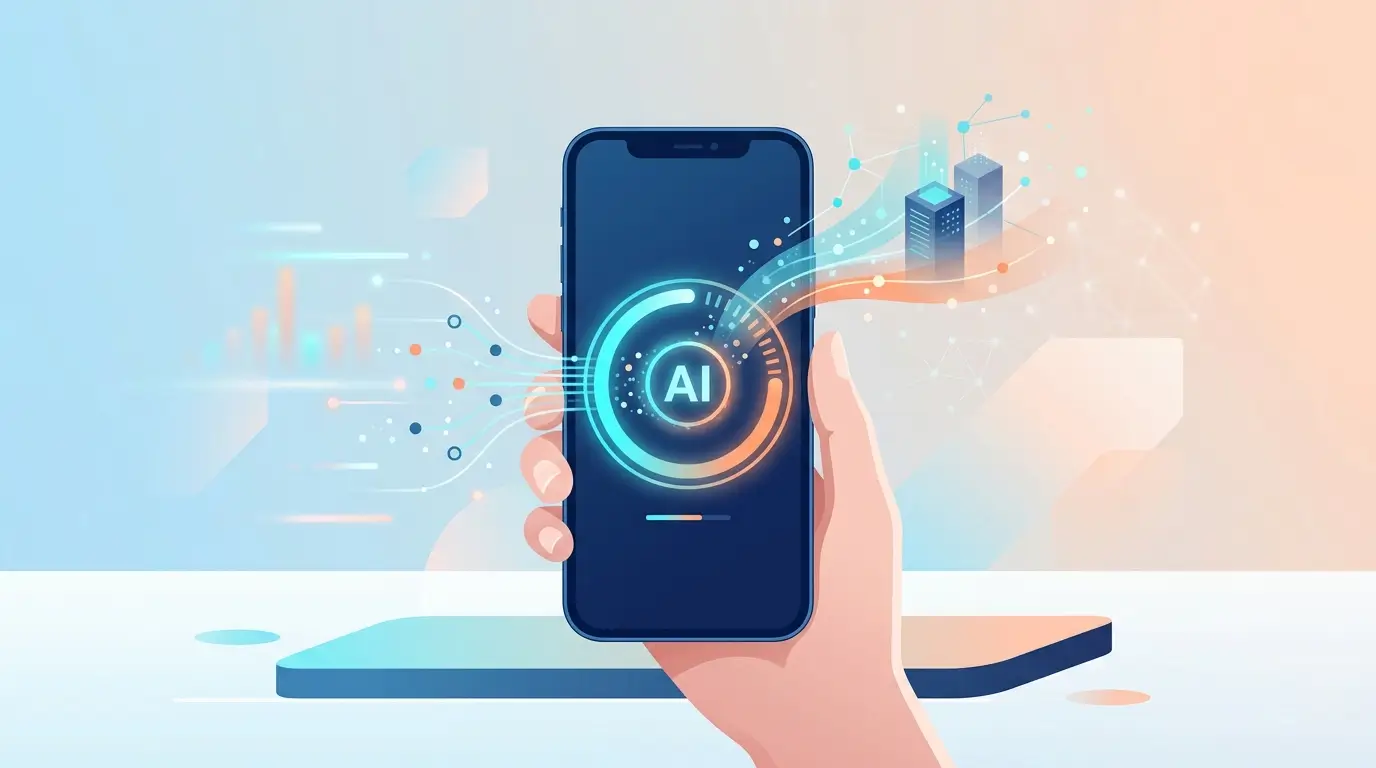
Today, many engineering teams are adopting a fresh approach. They no longer treat artificial intelligence like a distant service instead they are creating systems that are executed much closer to the point that the decision-making process takes place. This shift is driving adoption of on-device AI. It allows applications to respond quicker, reduce the dependence on external infrastructure, and provide better control over information that is confidential.
Modern AI requires infrastructure designed to handle real work
It’s now apparent to programmers that selecting the right language model to build intelligent software does not suffice. Performance also depends on the architecture. If an AI app performs well in the field it will be based on factors such as the efficiency of runtime and observational capability.
The increasing complexity has resulted in an increasing demand for AI agent infrastructures capable of supporting intelligent decision making automated workflows, as well as ongoing execution. Instead of relying on general-purpose platforms that are designed to meet every possible application numerous organizations have opted for customized infrastructure tailored to their own operational requirements.
Thyn was established on this idea. The company doesn’t offer one AI app, but instead develops runtime engines that can support several different solutions that allow the engines to evolve on their own. This design approach lets engineering teams focus on solving business problems rather than constantly rebuilding the basic infrastructure.
Better tools help developers build better systems
As AI is integrated into software applications developers require more than APIs. They require environments that facilitate deployments, debuggings, monitoring, testing and runtime management.
Modern AI developer tools increasingly emphasize transparency and control. Developers want to understand how systems behave under production workloads, measure precision of latency, and maximize resource consumption without compromising performance or reliability.
Thyn invests heavily in these engineering foundations with a focus on measuring system performance, not broad claims of marketing. Runtime research is treated as an essential engineering discipline that will strengthen all products built within the ecosystem.
The use of specialized intelligence is much more effective than platforms that can be sized to fit all
There is no way that every AI workload is the same. All AI workloads, including cryptographic applications, financial trading, marketing automation software, embedded software, and autonomous systems, have distinct performance requirements, security models and operational restrictions.
Thyn develops engines that are tailored to specific domains instead of requiring each application to be part of the same framework. This allows products to evolve independently, and benefit from common architectural research and governance.
AI coders are beginning to follow the same principles. The modern coding assistants are more specific and more limited. They can assist developers automate repetitive tasks, produce code, and analyze repositories.
Information closer to the decision-making point
The future of artificial intelligence goes beyond just generating information. Successful systems are increasingly in a position to think, analyze contexts, take decisions and execute actions with speed.
When it comes to products that depend on reliability and responsiveness in addition to security, running AI locally can be a significant benefit. On-device AI decreases network dependence and delays while allowing applications to function even when connectivity has been insufficient. It enhances user experience and gives organizations more control over their infrastructure and data.
The scalable AI agent architecture guarantees that intelligent systems are observable and maintained. It also permits them to adjust as the demands alter.
Thyn offers a brand new approach in software development. It focuses more on creating an institutional base for intelligent software rather than focusing on individual applications. Thyn’s sophisticated runtime architecture and specialized engine, as well as its robust AI developer tool, and modern AI code agents are helping to shape an ecosystem in which AI is more effective, faster, secure, more reliable and ultimately more beneficial to the developers creating the next generation intelligent products.